

Gentle smiles from handlers can hide a very different story. Travellers searching for the best elephant sanctuary in thailand often see happy photos that leave out key details. A short metal hook, a length of chain, or a hidden nail can say more than any brochure. These tools keep large animals obedient through pain or fear. Spotting them takes only a little attention during a visit. Once you know what to look for, the difference between care and control becomes much clearer.
What a Bullhook Really Does
A bullhook is a wooden or metal stick with a sharp hooked tip. Handlers press or jab it into sensitive spots behind the ears, around the mouth, or on the legs. Even when it is not used, the animal remembers the pain it causes. That memory alone keeps many elephants obedient.
Clues That Coercion Is Happening
Tools are not always held in plain view. These signs can reveal control methods even when everyone appears friendly.
- Handlers carry sticks wrapped in cloth or tucked inside sleeves.
- Small wounds or scars appear behind ears or around the face.
- Short chains hold legs tightly between activities with visitors.
- Animals flinch or freeze whenever a handler raises an arm.
- Repetitive swaying or head bobbing continues for long periods.
- Elephants stand on concrete instead of soil or grass.
- Staff refuse to answer questions about how animals are handled.
- Calves remain separated from mothers or family groups all day.
How Chains Shape Daily Life
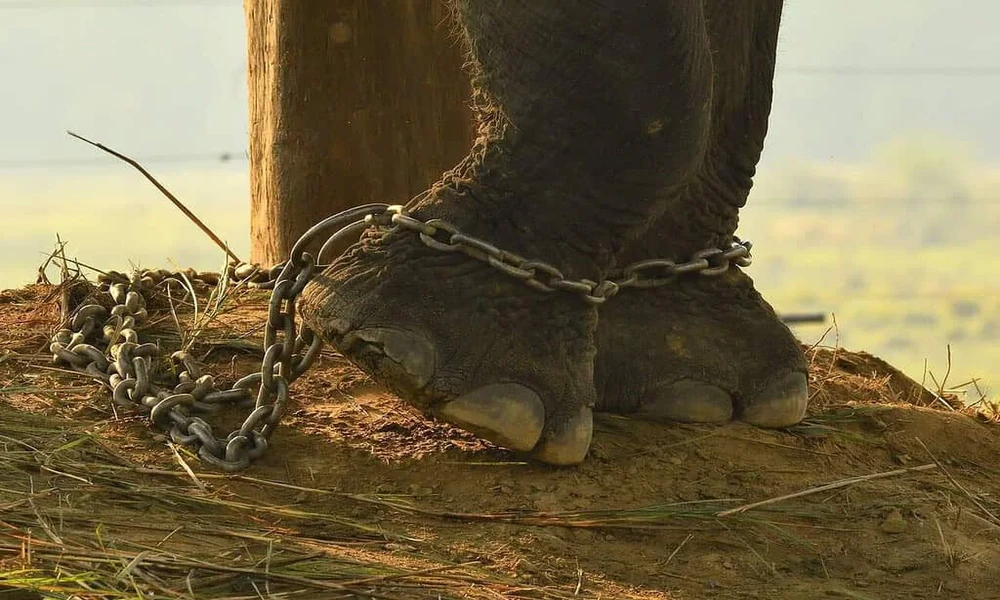
Short chains stop elephants from walking, foraging or socialising freely. Many camps keep animals tethered for most of the day and night. Constant restraint can cause sores, joint problems and visible signs of stress. A chain may look harmless in photos, yet it shapes almost every hour of an elephant’s life.
What Do Positive Handling Methods Look Like Instead?
Welfare-focused sanctuaries rely on positive reinforcement rather than pain. Keepers use voice cues, target sticks with soft ends, and small food rewards to encourage cooperation. Elephants learn that moving toward a target or lifting a foot brings something pleasant.
Many centres also use protected contact. This means keepers work from behind a barrier during health checks, so they can examine feet or skin without restraint. These methods take more patience and training, but they build trust instead of fear. They also make routine care safer for both elephants and staff.
Why Hidden Tools Still Cause Harm
Some camps hide hooks during visitor hours. The animals still remember earlier punishment and respond to that fear. Removing tools from view is not the same as removing them from use.
Choosing Places That Reject Coercion
Visitors looking for the best elephant sanctuary in thailand should check written policies first. Genuine sanctuaries clearly ban bullhooks, chains, riding, and shows. They also explain how elephants are cared for on a daily basis. Reviews that mention free roaming and quiet observation are usually encouraging signs.
Common Control Tools and Kinder Alternatives
Each coercive tool has a gentler option used by responsible centres. Knowing both helps you judge what you see on site. The table below lists common tools, their effects, and humane replacements. Use it as a quick guide during any visit.
| Tool | Common Use | Effect on Elephants | Humane Alternative |
| Bullhook | Forcing movement or stillness | Pain, fear and wounds | Voice cues and target sticks |
| Short chain | Restricting movement overnight | Sores and stress behaviours | Open enclosures with natural ground |
| Hidden nail | Steering during shows or painting | Hidden injuries and anxiety | No performances at all |
| Food deprivation | Forcing obedience in training | Weakness and distress | Reward based cooperation |
| Tight ropes | Holding animals for photos | Restricted breathing and movement | Observation from a distance |
Elephant Handling FAQ for Visitors
- Do all camps use bullhooks openly? No, many hide them during visitor hours.
- Are chains ever necessary for elephant care? Rarely, since barriers and enclosures allow safe care.
- What does protect contact mean? Keepers work from behind barriers during routine health checks.
- Do rescued elephants remember past punishment? Yes, fear can linger long after tools disappear.
- How can visitors check handling methods? Ask staff directly and read written welfare policies.
- Should I report suspected abuse? Yes, share honest reviews and contact welfare organisations.
Look Past the Smiles Carefully
Pleasant faces and polished photos can still conceal pain. Hooks, tethers and hidden nails keep many animals compliant through fear. Responsible centres replace those methods with patience, rewards and open space. Watch closely, ask direct questions, and support places that publish clear policies. Small, careful choices made on every trip help shift demand toward kinder care.
